
Although the objective of energetically renovating 1.2 million houses in the next decade was defined by the Government before Covid-19, this line of action is now revealing itself as a good business capable of attracting a large amount of European funds, which would increase the public revenue between 1,000 and 4,000 million euros each year.
Rehabilitation is one of the levers that the construction sector identifies as a driving force not only for its activity, but also for the economy after the health crisis. Only energy rehabilitation in the building sector could create among 33,000 and 88,000 jobs.

Homes officially account for 40 % of polluting emissions. A percentage that rises to 56 % if other buildings are added, compared to 13 % represented by cars, according to the Passivhaus Building Platform, which, since 2008, has been promoting the construction of highly efficient buildings without profit.
Its president, Bruno Gutiérrez, considers that four out of five buildings are inefficient, which means that they do not have adequate levels of thermal insulation or even lack it, that they have uncontrolled air leaks that affect energy consumption and do not use efficient generation systems.
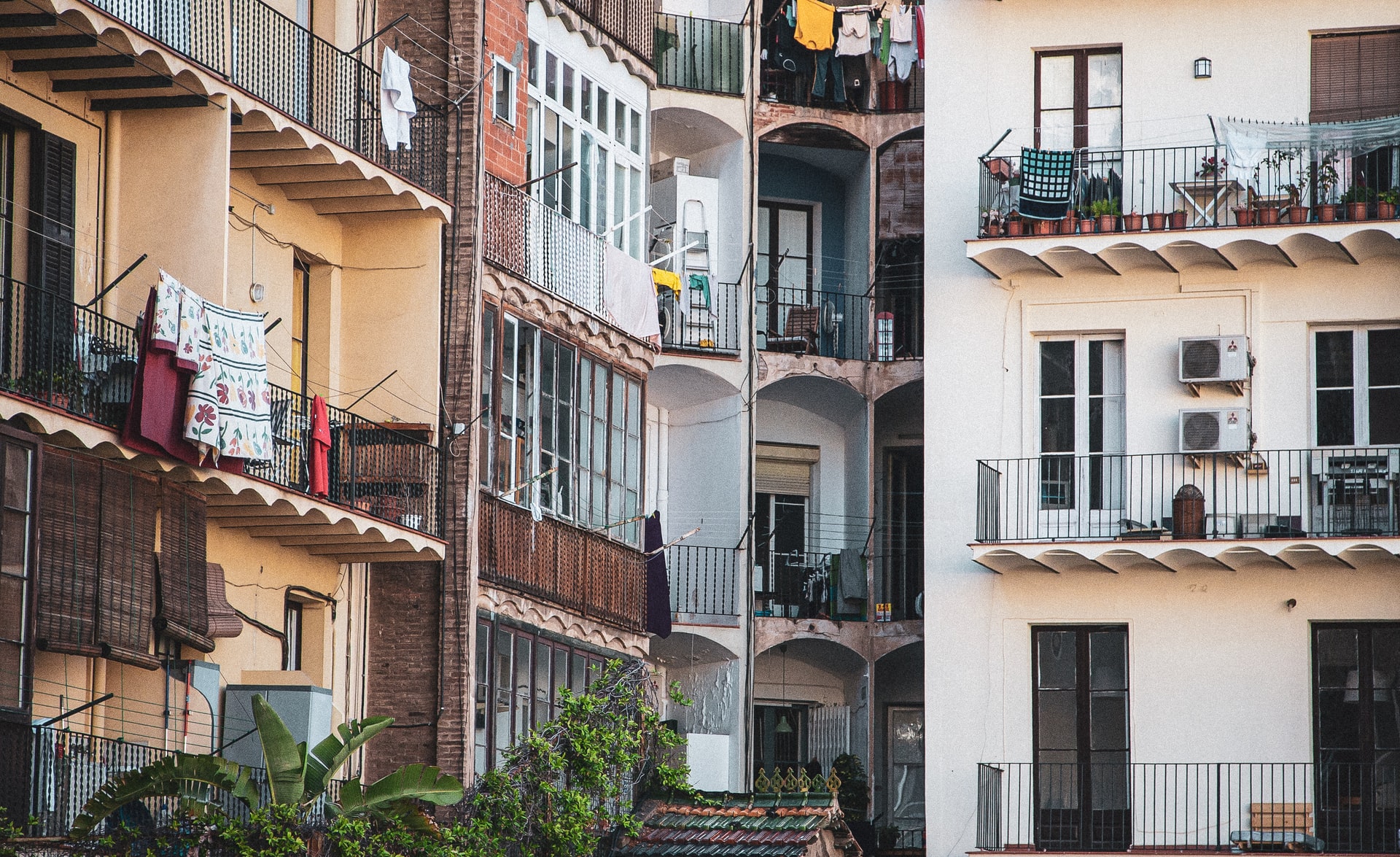
From the Ministry of Transport, Mobility and Urban Agenda (Mitma) It has already been said that it will draw up a plan, in principle for the next two years, for the amount of 2,000 million euros, to rehabilitate 120,000 homes per year.
In total, what is planned by the Government is to mobilize an investment of 27,122 million euros throughout the decade, of which 27 % (7,307 million) would come from public funds (state and European), for the rehabilitation of the envelope heating of 1.2 million homes and the replacement of some 3,845,000 heating installations.

In the sector they are optimistic and at the recent summit of the CEOE, the president of the National Construction Confederation (CNC), Juan Lazcano, stressed that allocating 2,000 million euros to rehabilitate 120,000 homes a year would generate wealth worth 52,000 million. "The sector has the capacity to be the engine and base of a lasting economic recovery," said Juan Lazcano.
Of course, the employers demand tax discounts linked to the energy rating of buildings, establish a Reduced VAT on rehabilitation and that aid and subsidies are not taxed as an increase in wealth.
From the General Council of Economists of Spain It is considered that construction must be one of the sectors that now leads the recovery, maintaining investments in strategic projects, "especially those linked to housing rehabilitation -especially in matters of energy saving- and areas related to the sustainability, climate change and digitization, which will result in a greater competitiveness of our country”.
The National Association of Distributors of Ceramics and Building Materials (Andimac) points out that already in 2008 the rehabilitation pulled the construction. “And again it is time to activate rehabilitation policies. It is an investment in which most of the countries in Europe are one or two decades ahead of us. It's also an obligation." At the moment “in the rehabilitation is the great market niche. It generates more employment than any other activity, it requires more skill, more training, it is a more stable activity”, points out Andimac.
Source: ABC, La Información, El Periódico de la energía.